
QVision
Existing CCTV analysed live — detecting incidents and unsafe behaviour, masking personal data on the spot.
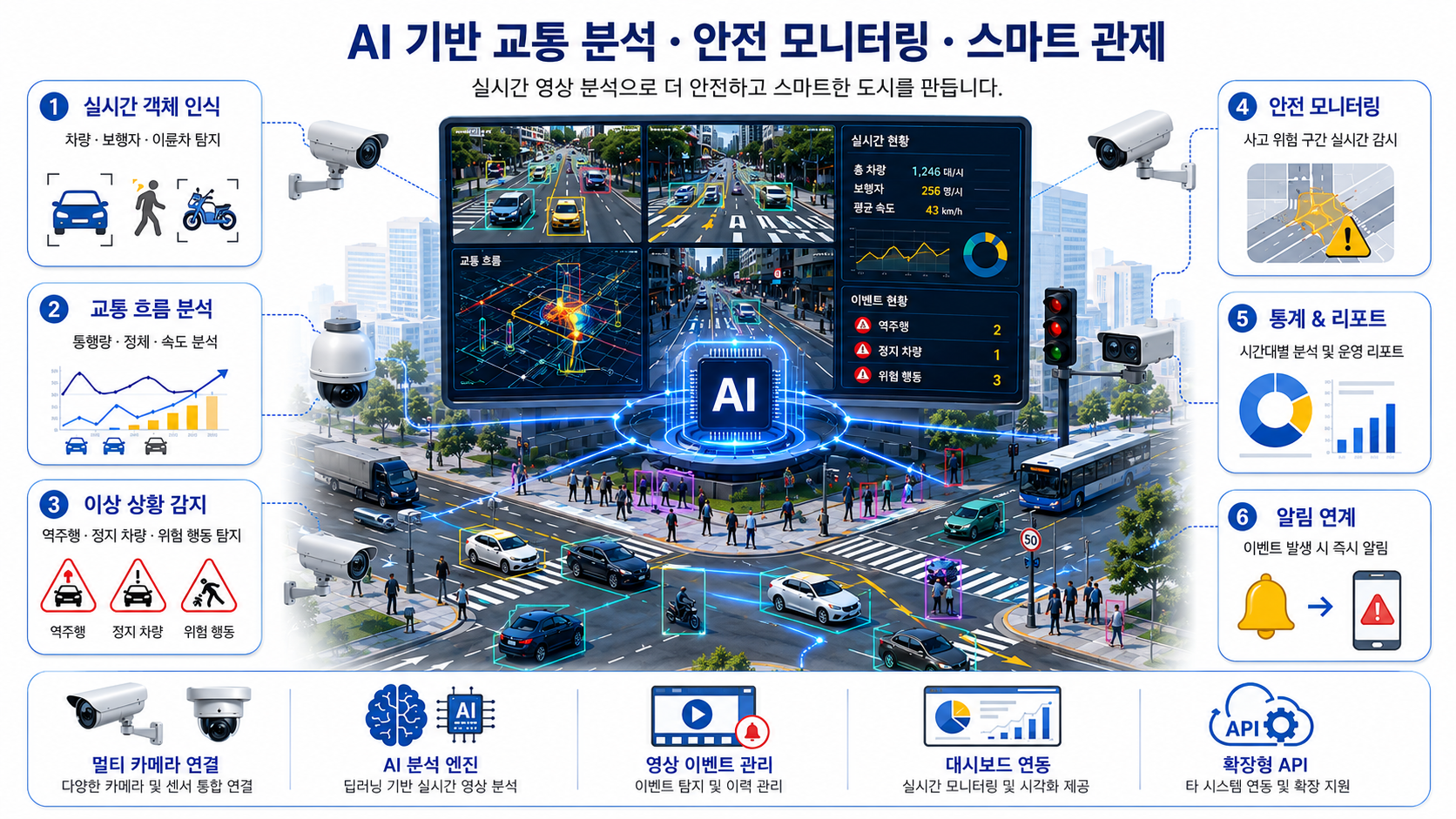
Cameras you already have, working as traffic and safety sensors
CCTV footage gives traffic counts by vehicle type, and potholes and incidents are detected live and passed to the control room.
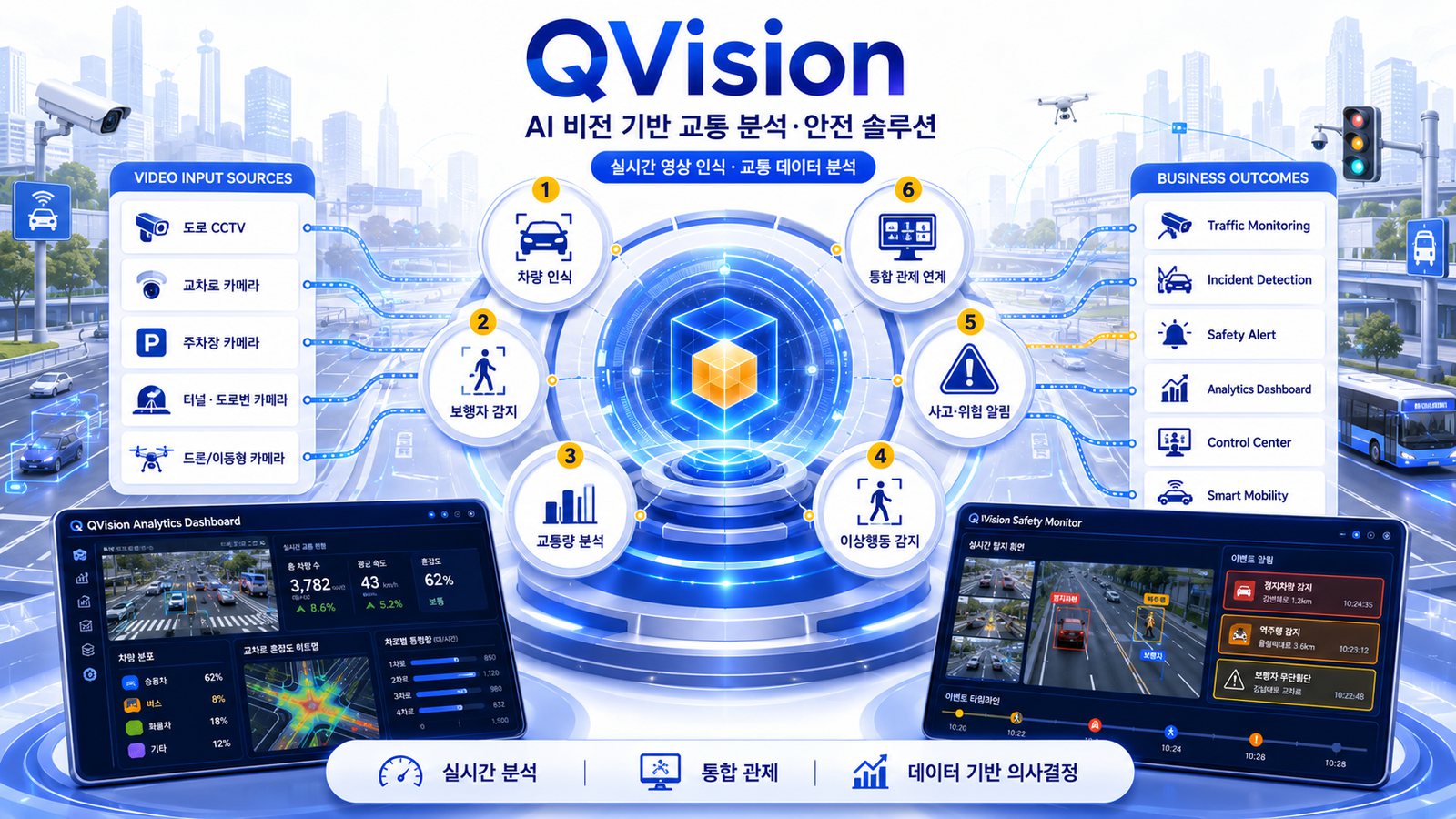
Vehicles and road hazards, read live from the video
Traffic is counted by vehicle type from the camera feed, and damage to the road surface is found live and sent to the control room.
Live traffic counting
Vehicles are detected and classified from the footage, counted by type and turned into statistics.
- Counting by type Passing vehicles sorted by type and counted automatically
- By direction at junctions Counts kept separately for each direction through the junction
- Fixed or mobile Works for permanently installed and for mobile surveys
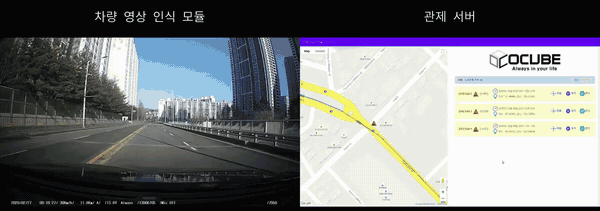
Live pothole detection
Potholes are found live in the driving footage, and their location and details go to the control system.
- Whatever shape they take Trained on potholes of many shapes and sizes
- Detected and sent live Found while driving, and reported as it happens
- Control room integration A system to monitor and manage everything that has been found
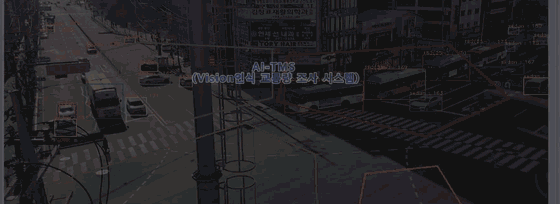
Traffic counted by vehicle type, automatically, as statistics
Vision AI tells the vehicles apart and counts them by direction of travel.
Traffic survey system
Fixed and mobile cameras counting by vehicle type
Signal control
The counts feed the traffic signal control system
Parking management
Bay occupancy and vehicles entering and leaving, identified to support parking management
Hazards on camera, turned into events for the control room
AI incident detection classifies what it sees and alerts both the system and the person on duty.
Detection can be extended to suit the operation, with a human review step to cut false alarms. Personal image data is masked according to the operating requirements and regulations.
It suits places like these
For places that need more out of the cameras already on the poles.
Control rooms where someone must keep watching
Too many screens to follow live, so footage only gets checked after the event
Where traffic surveys are done by hand
Roads and junctions where the people and the weeks it takes are the problem
Where road inspection depends on patrols
Potholes and cracks that ought to be found before anyone reports them
Where image data protection matters
The original footage never leaves, and personal data is masked where it is filmed