M.AX Platform

QFactory

Process, equipment, quality and energy data joined into one — predicting faults and waste, and pointing to the right action.

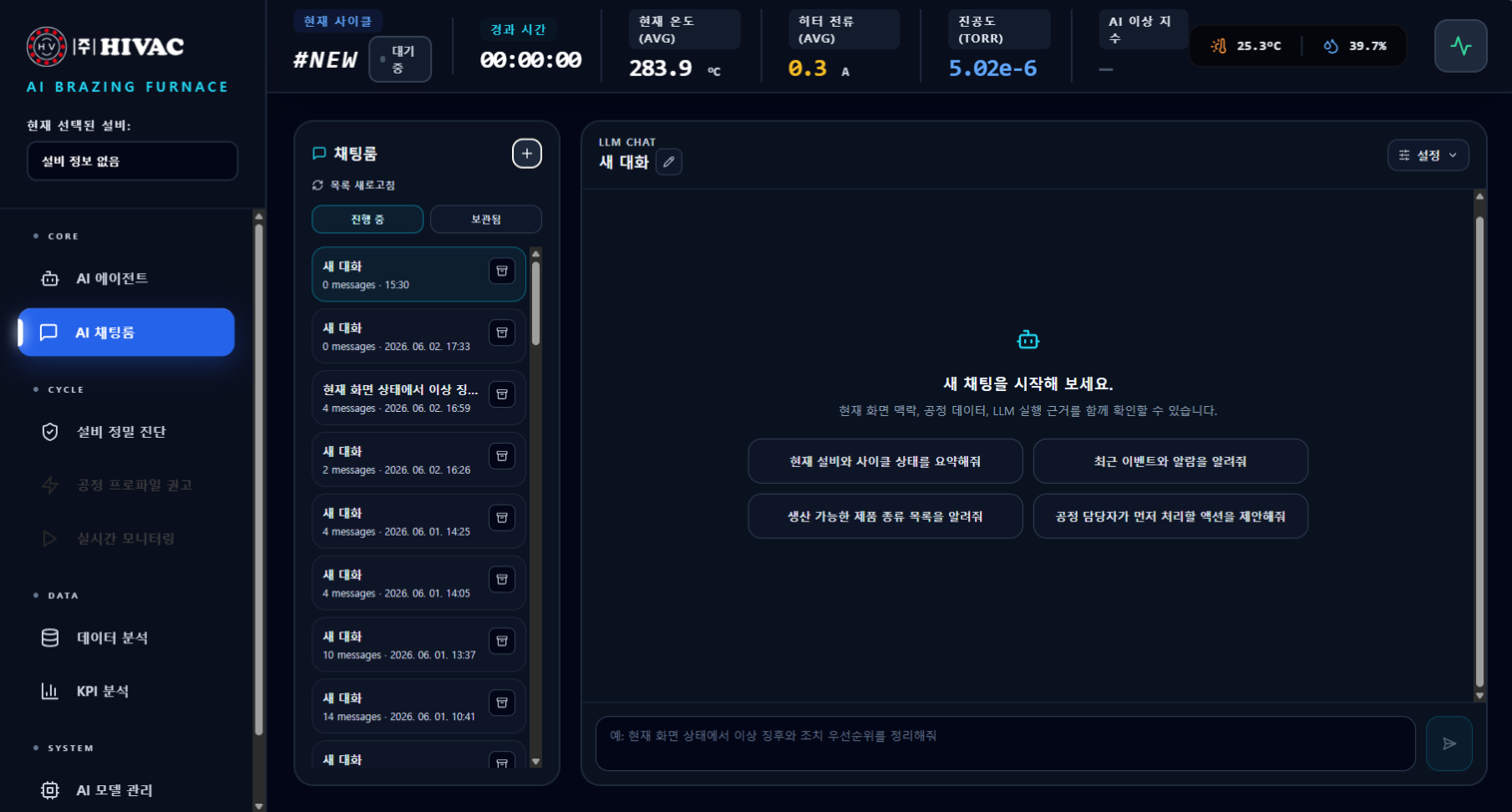
하이박 AI 브레이징 설비의 사이클과 공정 데이터를 확인하고 AI 에이전트와 대화하는 QFactory 운영 화면
Overview

Not one machine — the whole plant

QFactory leaves your equipment as it is, gathers data from the processes that matter, and carries predictions through into action on the line.

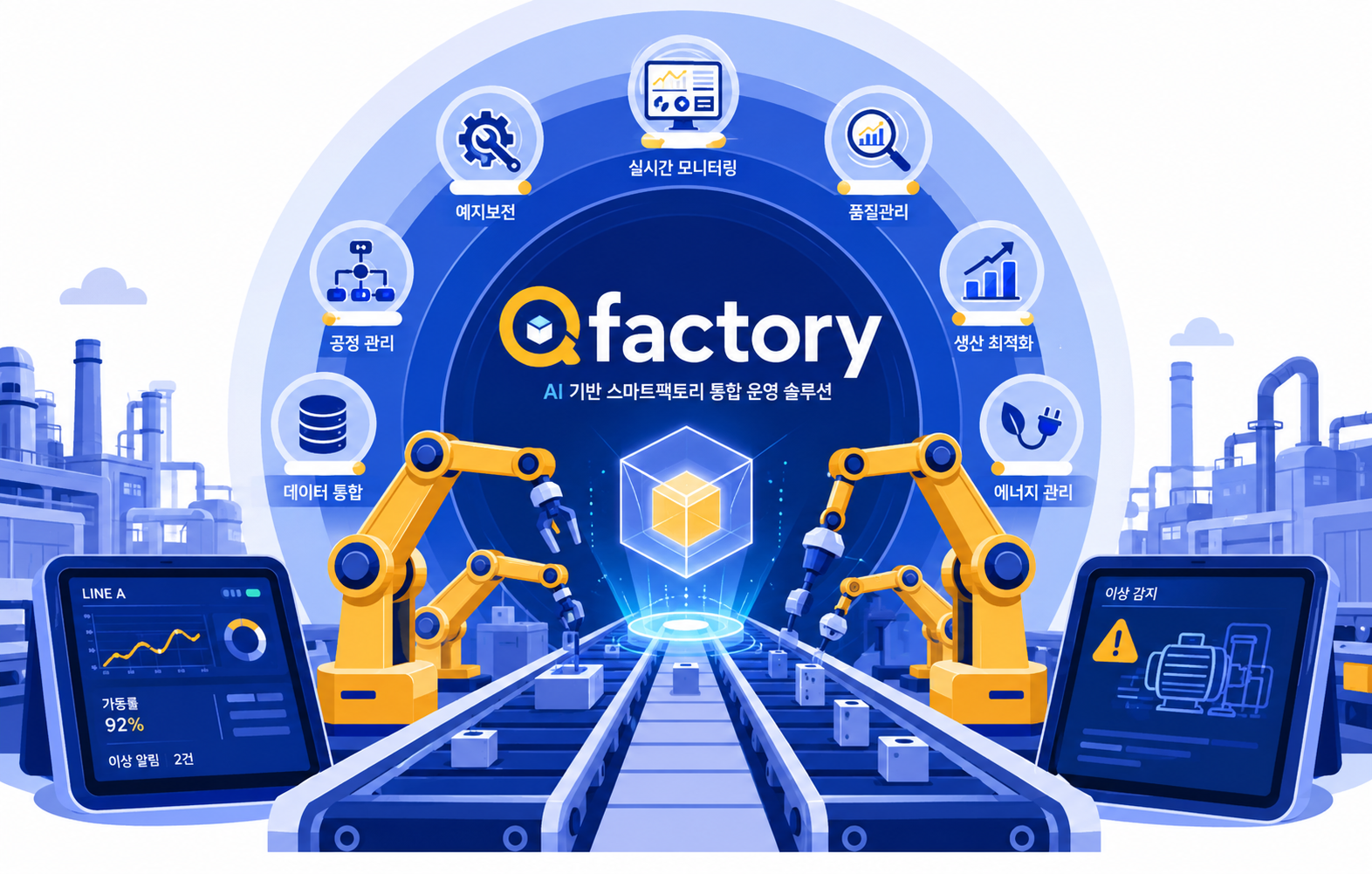
QFactory가 공장의 데이터 통합과 실시간 모니터링, 예지보전, 품질·생산·에너지 관리를 연결하는 모습
Plant data, unifiedEquipment, process and quality data joined, so the state of the whole plant is visible in one place
Live monitoring and anomaly detectionEquipment and flow watched continuously, so departures from normal surface early — with likely causes
Predictive maintenance and qualityFailure likelihood, remaining useful life and quality drift predicted, pointing to when to inspect and what to do
Production and energy optimisationProcess conditions and energy use analysed, with operating settings recommended for better output and efficiency
Manufacturing AX

Six AI capabilities across the whole of plant operation

Start with whichever fits the problem, then widen the proven scope step by step.

Adopting it in stages Nothing is ripped out. Add-on sensors and edge systems sit alongside what you have, and coverage grows from the process that needs it most.

01Data Foundation

Unifying plant data for AI

Control, quality and production systems and sensor data, aligned by time, job and machine.

Data joined
Process · equipment · quality · energy · logistics
How it is used
Consistency checks, root-cause tracing, and standard data for training
02Energy AI

Optimising heat generation and use

Heat generation and steam consumption read together, with settings that cut both oversupply and shortfall.

Data joined
Combustion · steam · fuel · air · temperature and humidity
How it is used
Balancing generation and use across incinerator, boiler and dryer
03Equipment AI

Equipment health and remaining life

Changes in rotating and drying equipment are read to predict faults, risk and how much life is left.

Data joined
Vibration · current · temperature · pressure · flow · maintenance history
How it is used
Early warning, maintenance priority, downtime avoided
04Quality AI

Quality prediction and supply-chain tracing

From raw material and additive through to final quality, time and lot history are linked to find where the variance came from.

Data joined
Concentration · particle size · process settings · inspection · shipping lot
How it is used
Quality prediction, root-cause tracing, feedback up the supply chain
05Safety AI

Video AI for safety

Video and equipment events read together to detect unsafe behaviour, entry into restricted areas, fire and other incidents.

Data joined
Live video streams (RTSP) · work zones · equipment alarms
How it is used
Alerts by severity, history, false-alarm feedback
06AI Operations

Running the models, widening autonomy

Training, deployment and accuracy are managed, and recommend → approve → act → check runs as one flow.

What is tracked
Model and data versions, accuracy, and shifts in the data
How it is used
Continuous retraining and rollback, edge integration, and autonomy widened in steps
Features

From diagnosing the process to running the models

Equipment, process, operations and performance data analysed and improved as one flow.

Detect

Detailed equipment diagnosis

Vacuum pumps, heaters, vibration and temperature sensors are read to find risk and early warning signs before the run.

  • Health assessment One combined verdict across pumps, heaters, vibration and temperature
  • Reviewing the verdict A person separates false alarms from real faults
  • Moving on safely Only approved findings carry into process design and live monitoring
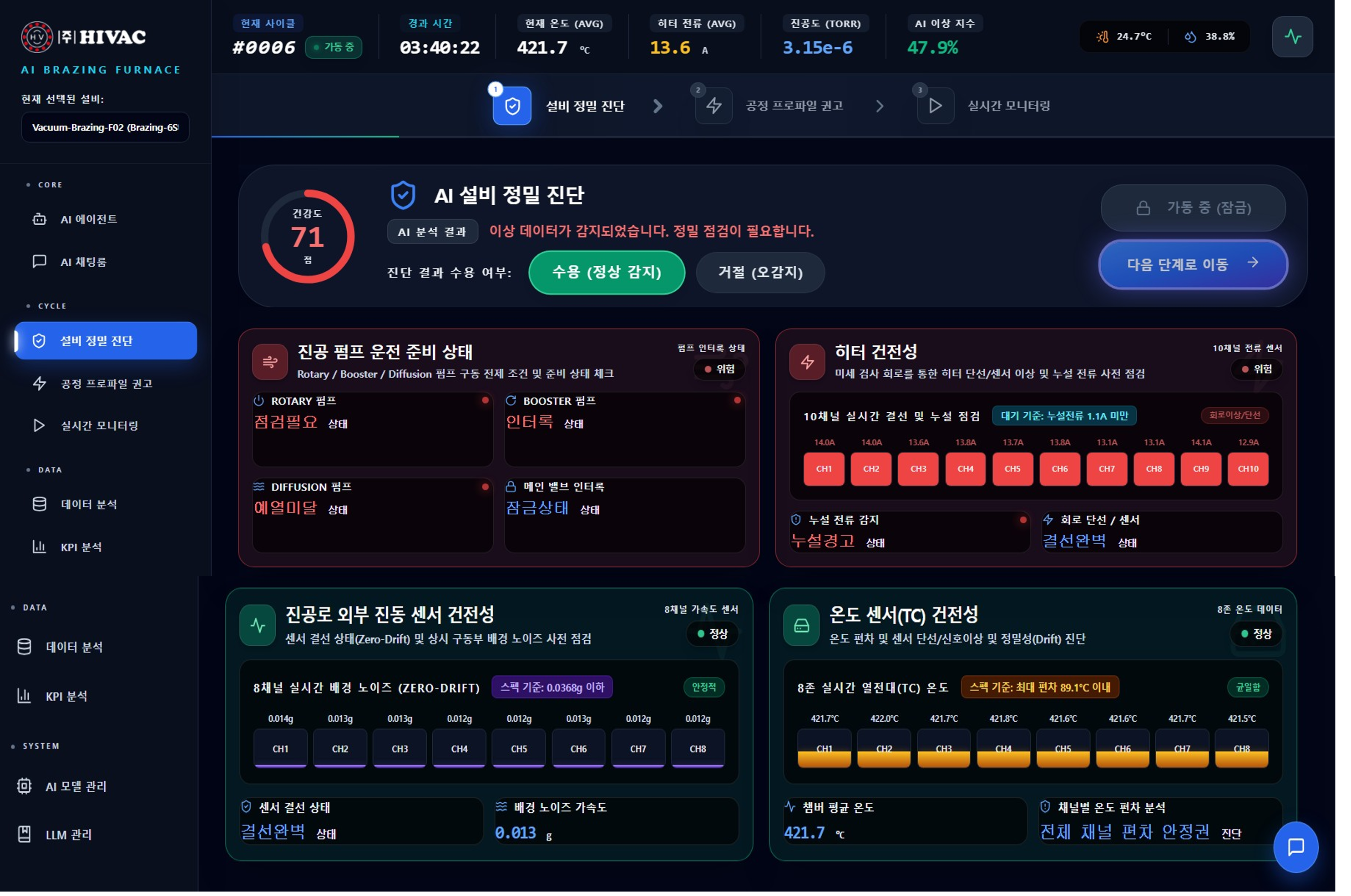
진공 펌프, 히터, 진동 센서와 온도 센서의 상태를 종합 판정하는 AI 설비 정밀 진단 화면
Recommend

Recommending the process recipe

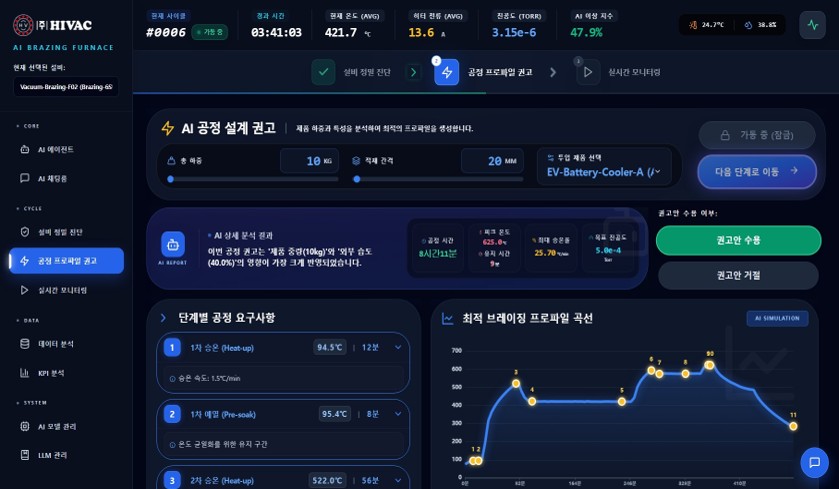
Product, loading and past results are analysed to propose the best operating profile, stage by stage.

  • Entering the conditions Product, weight, thickness and the rest
  • Generating the profile Target temperature and hold time designed from successful cycles and AI prediction
  • Applied only on approval The reasoning and expected outcome are shown, and a person accepts or declines
제품과 적재 조건을 입력해 최적 브레이징 온도 프로파일을 생성하고 승인하는 AI 공정 설계 권고 화면
Monitor

Live process monitoring

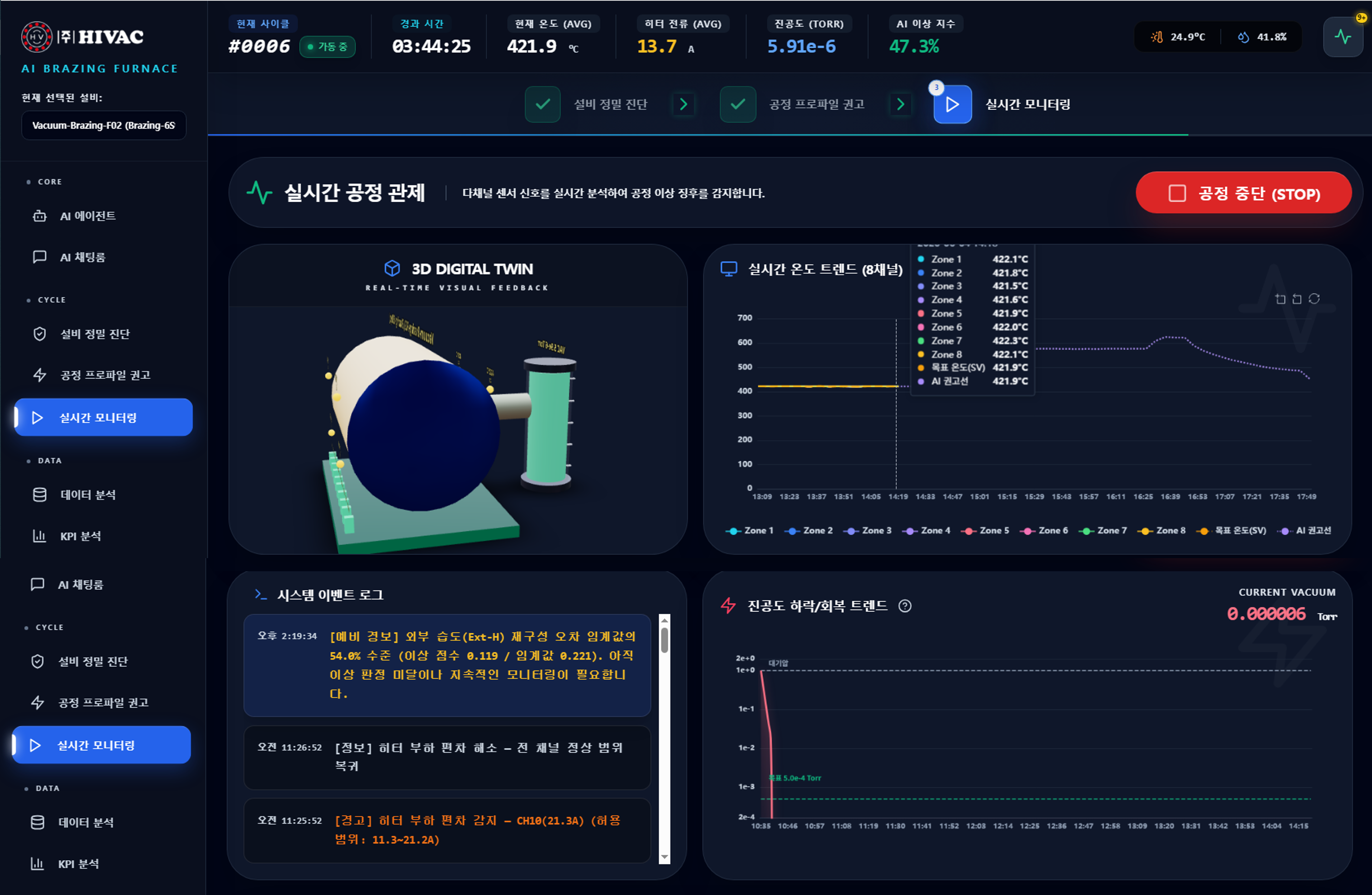
A 3D view of the equipment, with temperature, current and vacuum trends, watches the process as it runs.

  • Many signals at once Temperature, current, vacuum and ambient data on one timeline
  • Process alerts Departures from the normal pattern recorded with severity and likely cause
  • Operator action Warnings acknowledged, the process halted, and what was done kept on record
3차원 설비 화면과 실시간 온도 및 진공도 추이, 시스템 이벤트를 함께 보여주는 공정 관제 화면
Analyze

Cycle-level analysis

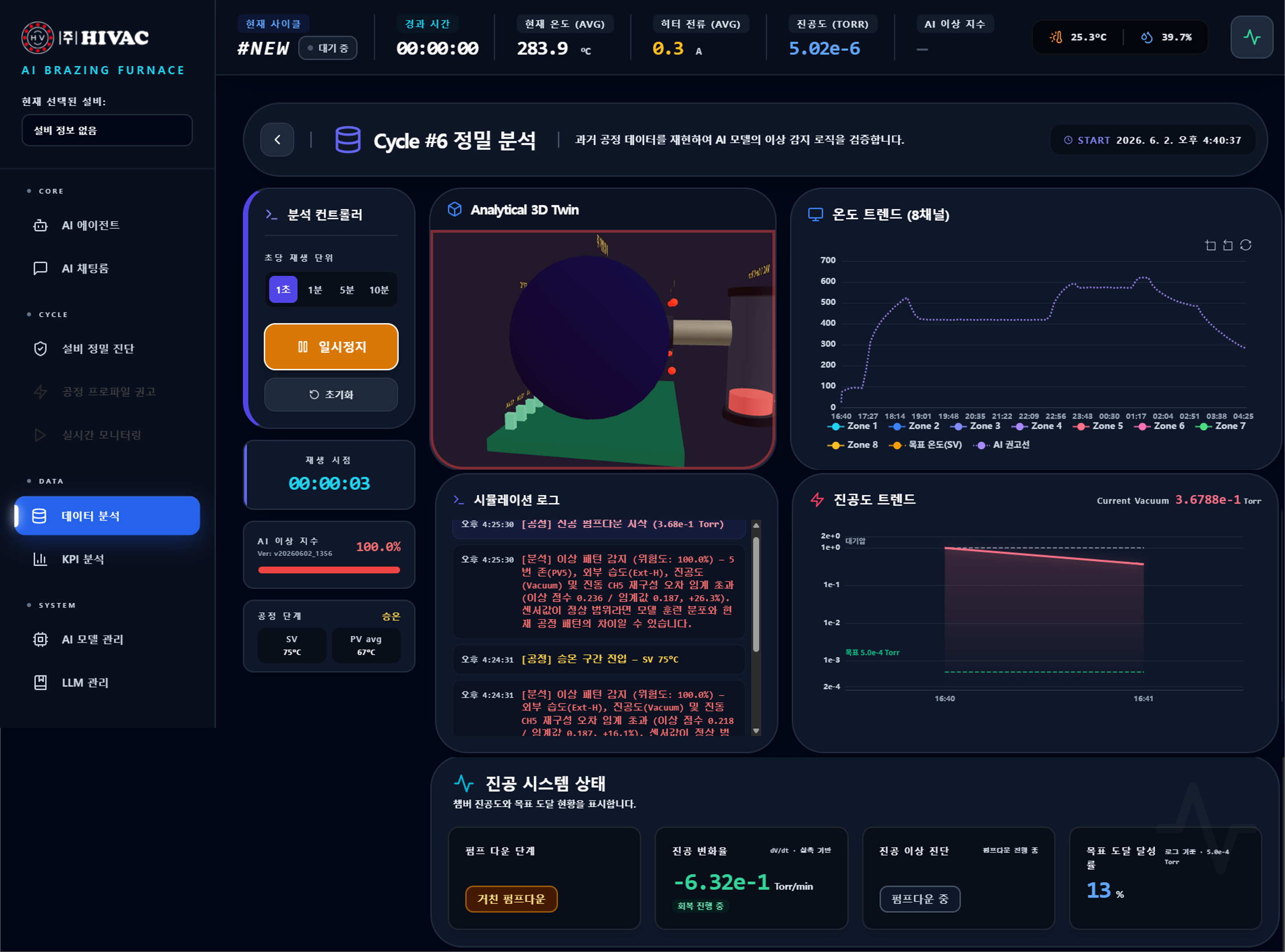
A finished run is replayed in order, checking when the AI called it and what the sensors were doing.

  • Replay by the second Temperature, vacuum, process step and logs synchronised on one timeline
  • Replayed in 3D Equipment and product state played back in three dimensions
  • Tracing the cause Detection scores compared against sensor movement to shortlist the cause
공정 사이클을 초 단위로 재생하며 3차원 설비, 온도, 진공도와 AI 이상 로그를 분석하는 화면
Measure

Process KPI analysis

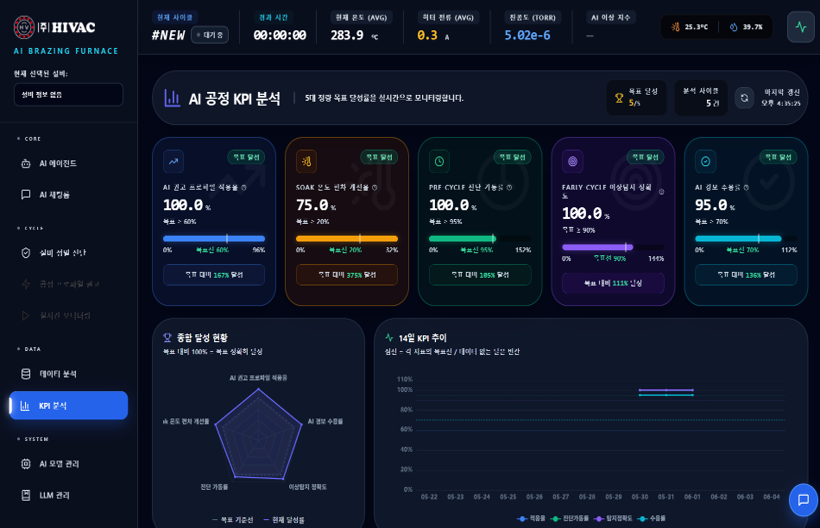
Equipment, process, yield and quality measures are analysed to show how close you are to target and what to fix first.

  • Key measures together Equipment, energy, process and quality performance against target
  • Overall diagnosis The weak measures are found and put in order of priority
  • Comparing cycles Performance by period and cycle, and whether the recommendation actually helped
설비 건강도, 열 침투, 사이클, 수율과 품질 지표의 목표 달성도와 추이를 보여주는 AI 공정 KPI 분석 화면
Operate

Managing the models

Accuracy and versions managed through an MLOps practice, with retraining as needed.

  • Models and data Training data, model versions, accuracy and where each was used
  • Retraining on feedback Confirmed normal and fault verdicts decide when to retrain
  • Verified before it goes live Compared against the current version; only an approved model goes in
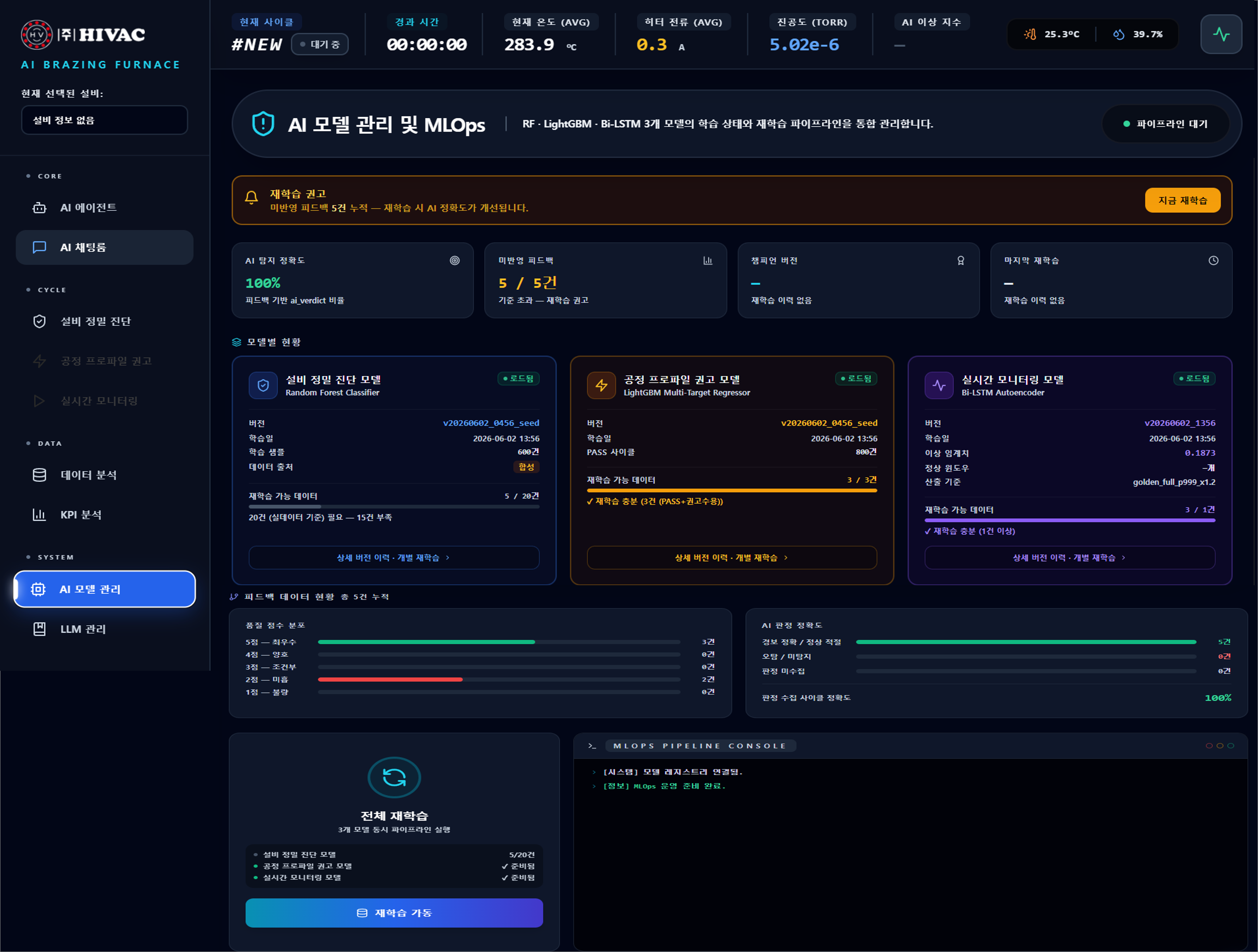
설비 진단, 공정 권고와 실시간 감시 AI 모델의 버전, 성능, 피드백과 재학습을 관리하는 화면
Why AI

AI finds the warning signs sooner — and says what to do

The small drifts, the causes and the right time to service — the things a threshold alarm alone tends to miss.

Threshold-based monitoring compared with QFactory manufacturing AI
AspectThreshold-based monitoringQFactory manufacturing AI
Anomaly detectionAlarms once a fixed limit is passed — after the factLearns the normal pattern, then catches small departures early
Finding the causeSomeone traces the logs by handGenerative AI answers questions with likely causes and remedies
Process settingsThe recipe stays as it isA profile recommended from condition and quality data
MaintenanceBy schedule, or after it breaksPredictive, based on remaining useful life
OperationTuned by hand, then left aloneData shifts watched, models retrained

The existing alarms stay. AI judgement is added on top to catch what they miss, and the change happens gradually.

Ideal Use Cases

It suits plants like these

For plants dealing with the kind of drift an alarm never catches.

Lines that manage quality on threshold alarms alone

Slow decline inside the normal range goes unnoticed, and the problem only shows up downstream

Processes that rest on an experienced eye

Heat treatment and assembly, where quality shifts when the operator changes

Continuous lines where a stop is a loss

Round-the-clock plants that can only schedule maintenance if they know when it will fail

Plants where energy is a large part of the cost

Where the savings only appear when equipment, process and energy are looked at together