
Processing a batch of appeal documents
Input Scanned documents and attachments taken in together
Chain OCR → address normalisation → database lookup → relevant rules
Output A draft review report with the evidence and the points to check
Specialist agents handle documents, speech and data, passing results on to a reviewable document and plan.
Ask through the portal and the right agents work through documents, knowledge and data in sequence — a workflow you can run again and again.
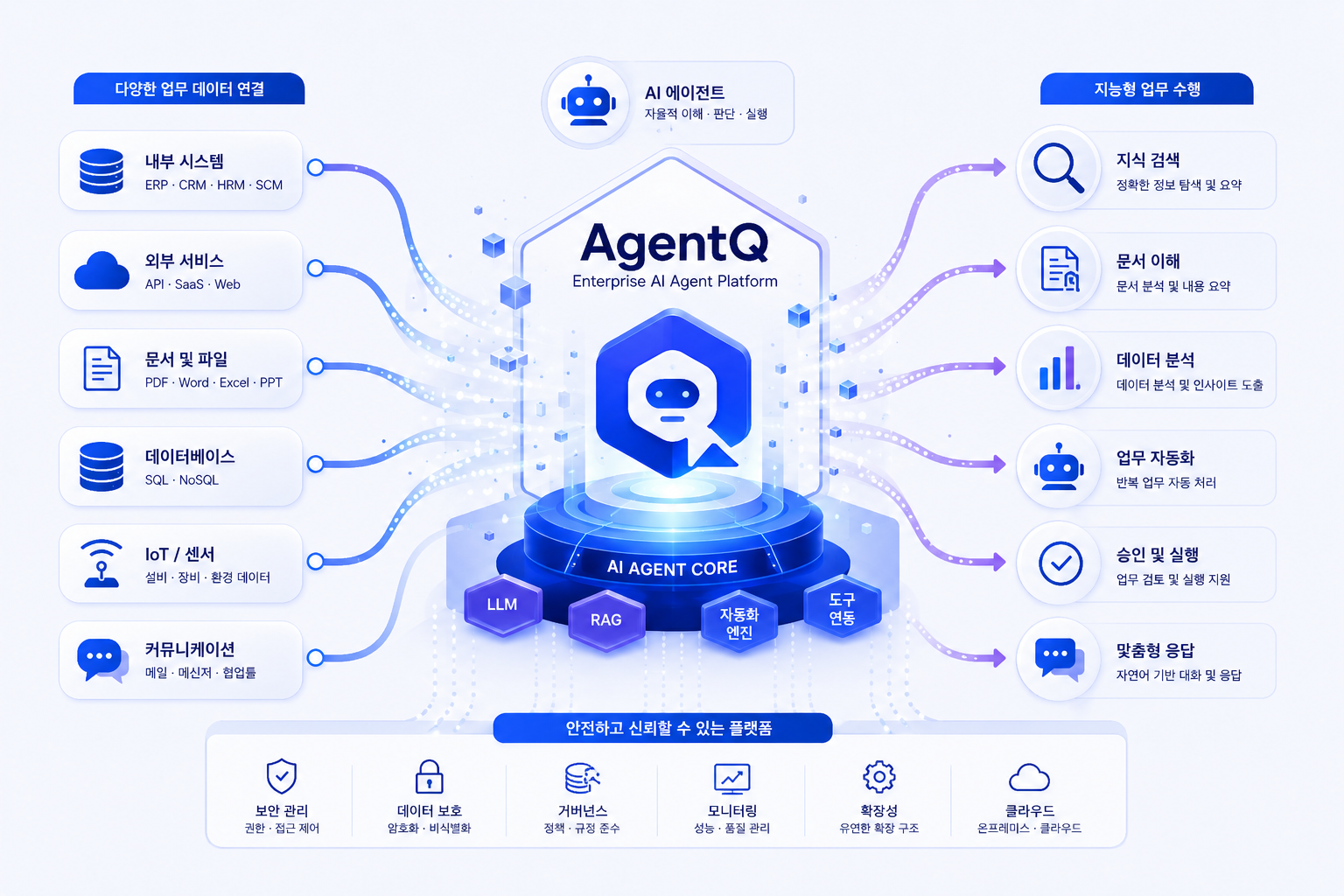
Knowledge search, drafting, transcription, policy review, data queries and secure chat — on one platform.
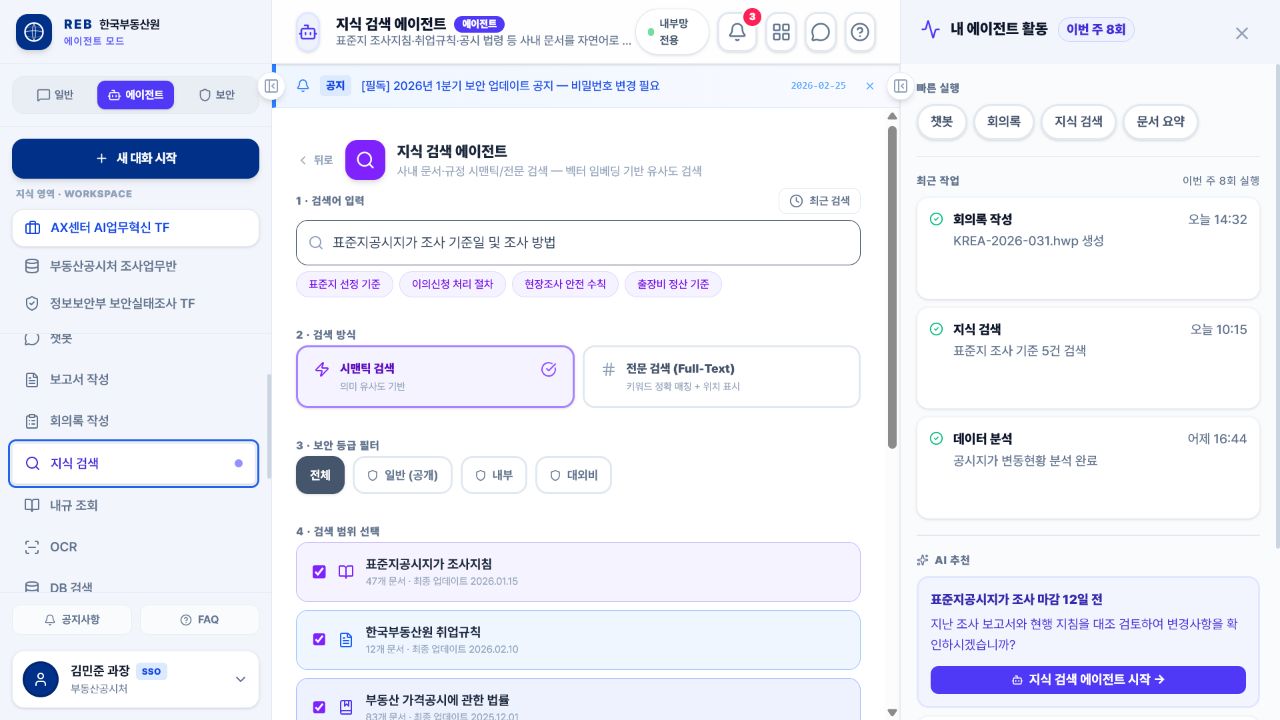
Search internal documents and policies in plain language, and see the evidence and sources behind the answer.
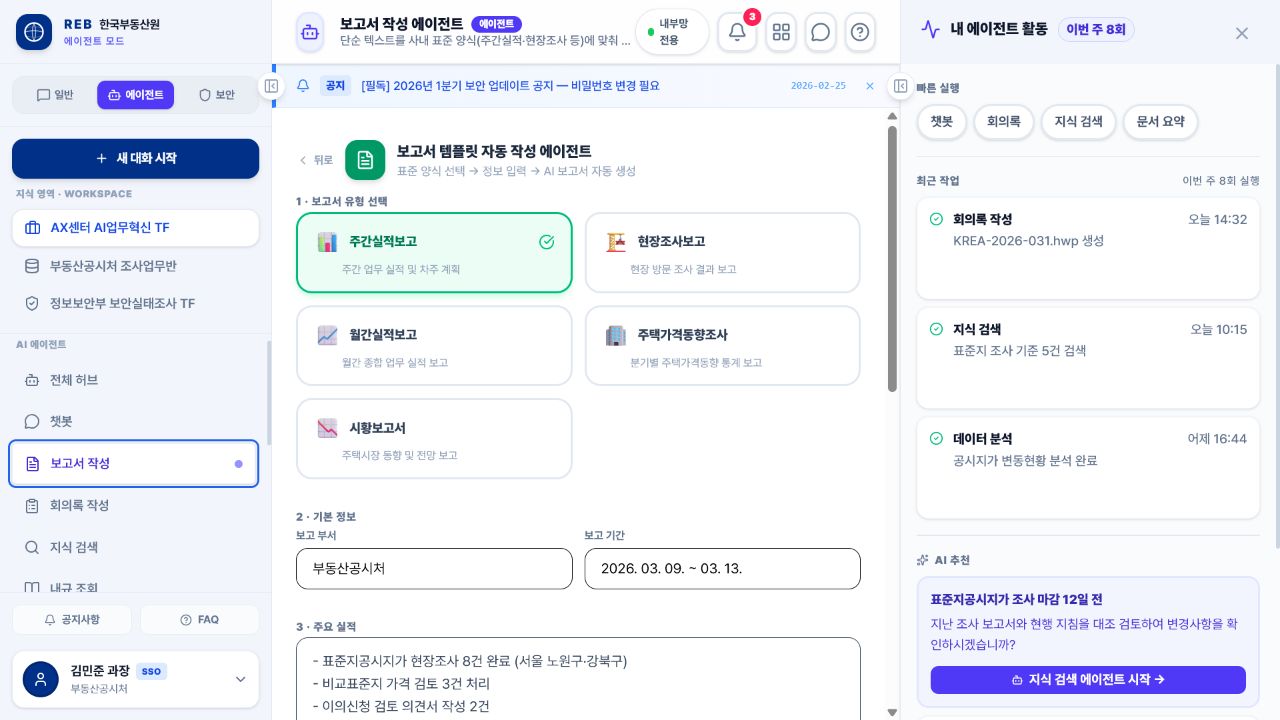
Give it the essentials and it drafts the report in your organisation’s format, ready to review.
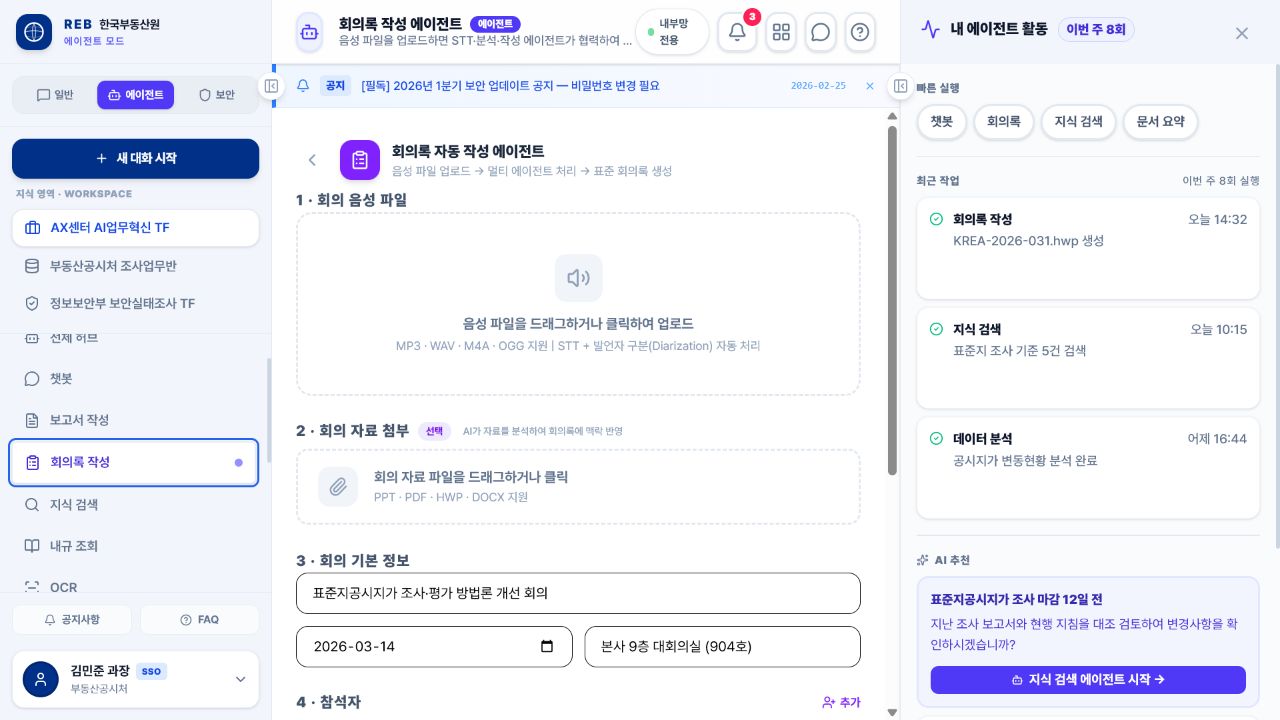
Upload the recording and the handouts; it separates who said what and writes up the discussion and the follow-up.
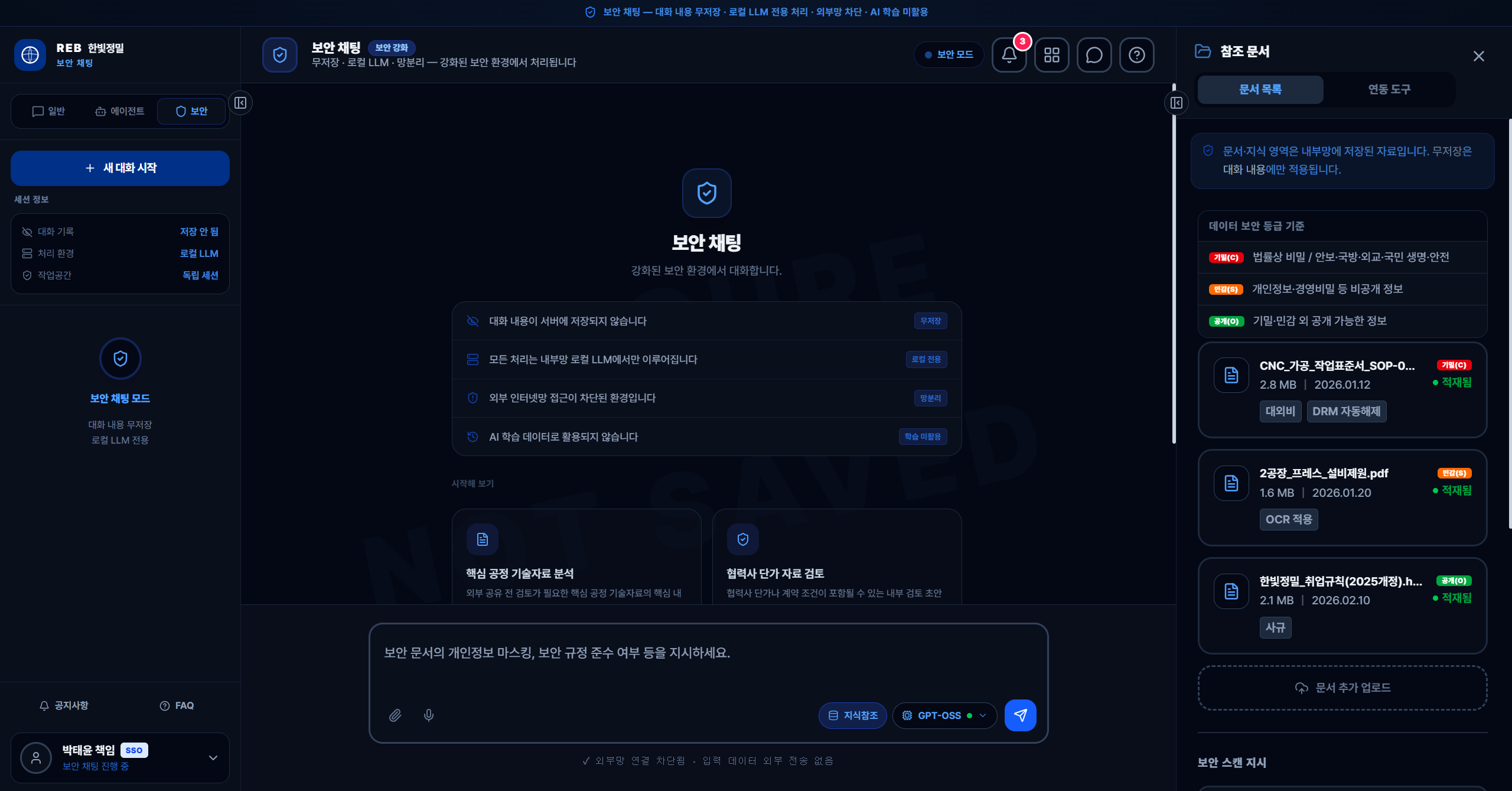
Drafts and reports are compared against internal rules and guidance, flagging possible breaches and what to shore up.
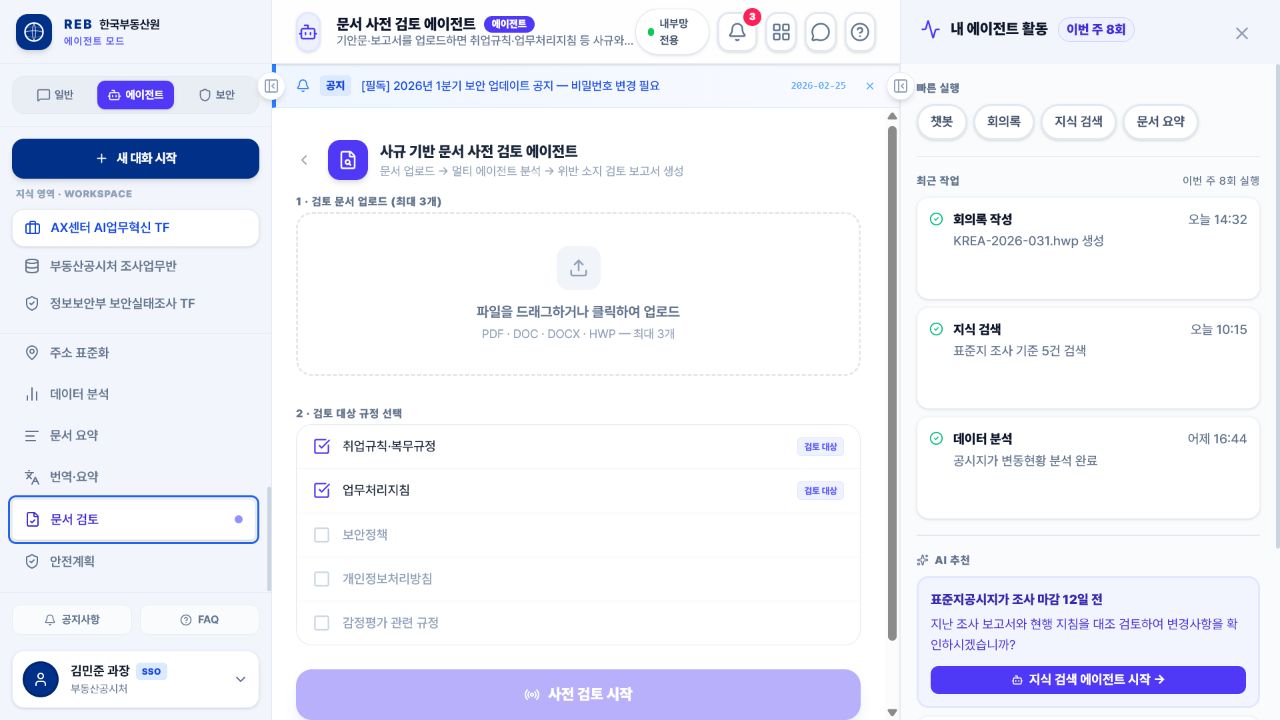
No SQL needed — ask the question and it fetches the data and shows it as tables and charts.
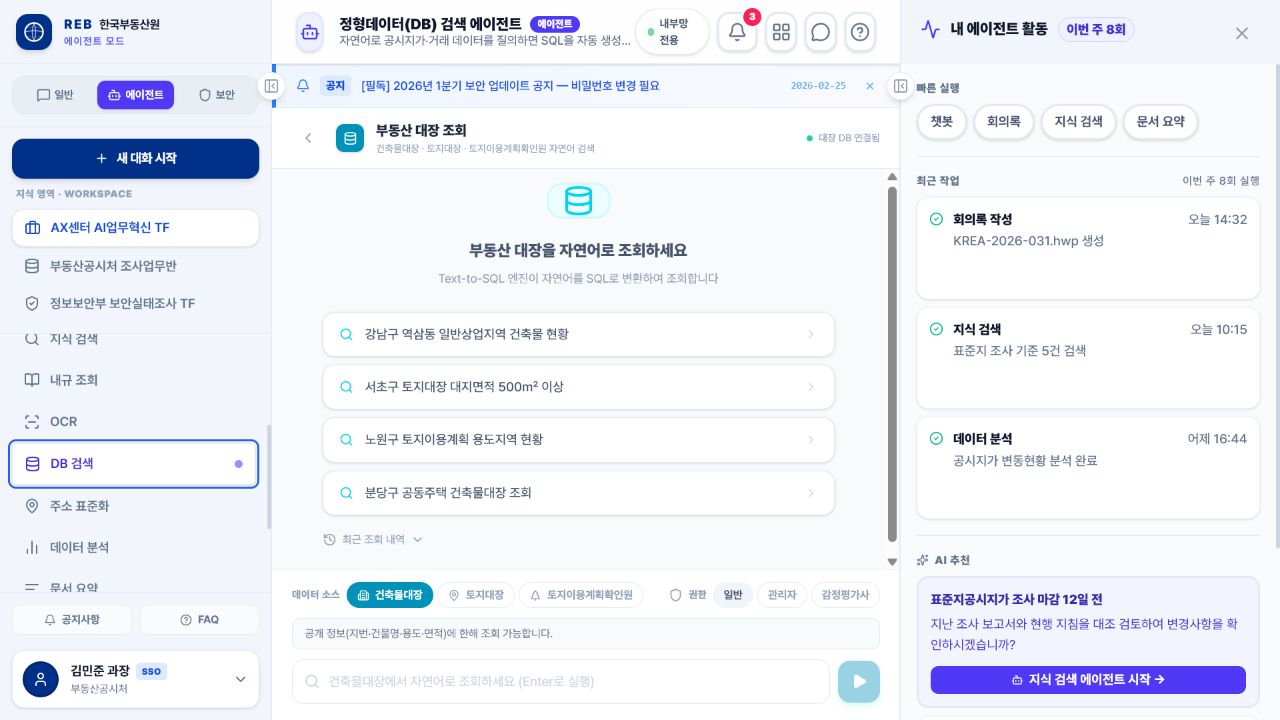
Sensitive questions and documents never leave the building — everything runs on a local model inside your network.
Documents and data are put in order first; then evidence, reasoning and checking; then the document, the approval and the handover.
Text, speech, documents, spreadsheets and data queries, all accepted
Protected files unlocked and scans read, leaving something searchable
Evidence and sources found across documents, rules and the vector database you are permitted to see
The internal model summarises and analyses for the task, then hands on to the next agent
Whether the evidence matches, how confident it is, personal data and classification — checked, with fixes requested
The official document and the analysis are produced, reviewed, approved and sent on to the business system
A method to match the material Unstructured documents, structured data and multi-step work each go to the tool and agent that suit them.
Finds and combines the closest evidence across internal documents and rules, and shows the source and its classificationalongside it
Turns the question into a database query, does the sums, and explains the result with tables, charts and the conditions used
OCR, address normalisation, database lookup, analysis and reporting joined up into a single deliverable
The prototype shows separate capabilities chained in order, producing work a person can then review.
Input Scanned documents and attachments taken in together
Chain OCR → address normalisation → database lookup → relevant rules
Output A draft review report with the evidence and the points to check
Input The transaction conditions and the data to examine are specified
Chain Database lookup → analysis → internal rules and legislation → report
Output A review document setting out the warning signs, the reasoning and what to check next
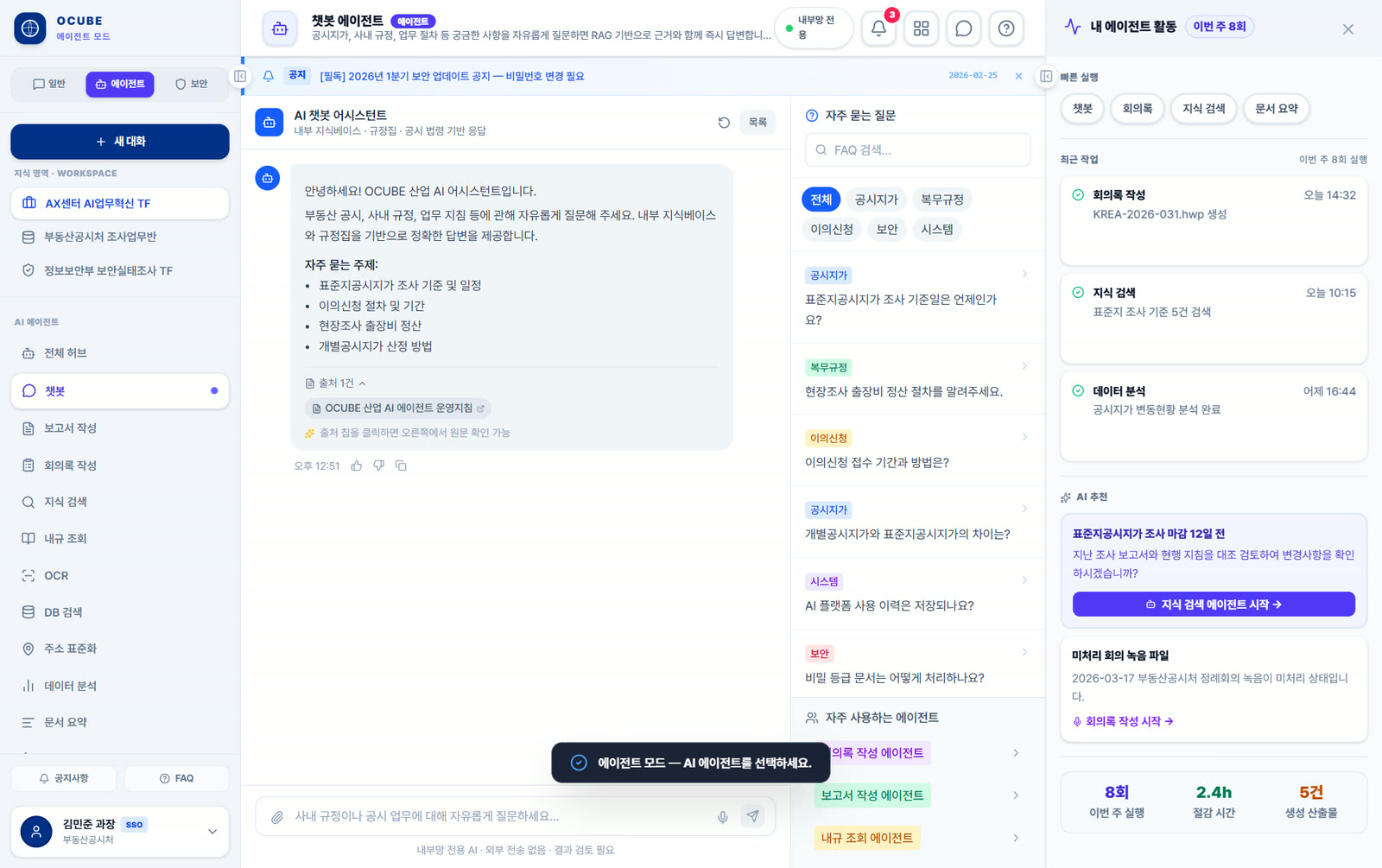
For work where documents, data and rules are tangled together, and the output needs both evidence and control.
Protected files, scans and recordings that must be put in order by text and speech recognitionbefore anything can be searched, summarised or reviewed
Finding the internal rule, the law or the guidance, recording the source and comparing it with the document — pre-review and assessment work
Querying databases and spreadsheets in plain language, then producing statistics, outlier checks and chartson top
Text recognition, address normalisation, data lookup, rule search and report writing, joined into one workflow across several agents
Analysis and evidence written into the set format — report, minutes, review note — and put through approval by the person responsible
Running an in-house small language model and knowledge base, with permissions, classification and usage records held to one consistent standard